
Table for all - 2022
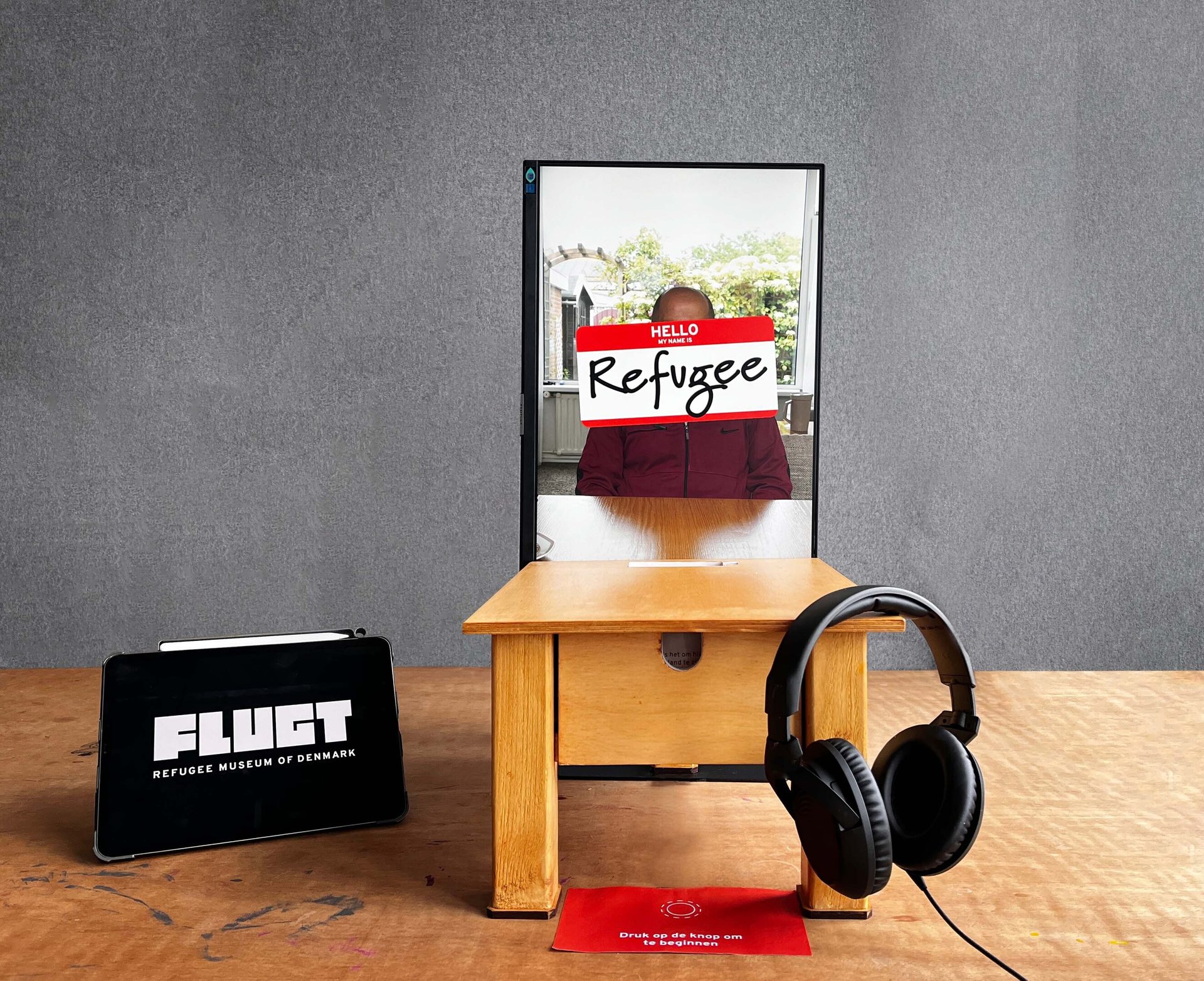
Table for All is a proof-of-concept installation developed with Tinker Imagineers that explores how museums can engage visitors with sensitive social topics. By inviting people to sit down and talk, the project aims to break down stigmas around refugees and create moments of empathy and human connection.
Goal
Create a 3D non-photorealistic rendered animated short in Blender within 4 months.
Motivation
Inspired by animations like Spiderverse, Arcane & Entergalactic we set out to create a stylised 3D short that blends expressive 2D aesthetics with technical 3D production. This project challenged us to step outside our comfort zones—Beth explored 3D and stylised painting for the first time, while Elin led the technical pipeline in Blender. Working as a dedicated two-person team pushed us creatively and we found huge mutual benefit in the collaboration.
Using conversation as an interactive tool to shift perception from “refugee” as a label to people as individuals.
Motivation
Discussions around refugees are often dominated by statistics and labels, which can distance people from the human stories behind them. This project was motivated by the belief that empathy grows through personal connection, and that museums can play a stronger role in facilitating meaningful dialogue around difficult topics.
Goal
The goal was to design an installation concept that encourages reflection, participation, and conversation—without oversimplifying or diluting the weight of the subject matter.
my role
I co-developed the project with Eva Neve, focusing on research, concept development, video production, and contributing to the design and build of the prototype.
Process
Working closely with designers and project managers, I organized large amounts of content, designed clear visual systems, and iterated based on feedback. The process balanced historical accuracy, clarity, and usability within an interactive exhibition context.
Concept & Intention
Table for All is a proof-of-concept installation developed with Tinker Imagineers that explores how museums can engage visitors with difficult societal topics without losing emotional depth. The project focuses on challenging stigmas around refugees by shifting attention away from labels and towards human stories. By inviting visitors to sit down and talk, the installation creates space for empathy, dialogue, and shared reflection.
Research & framework Devlopment
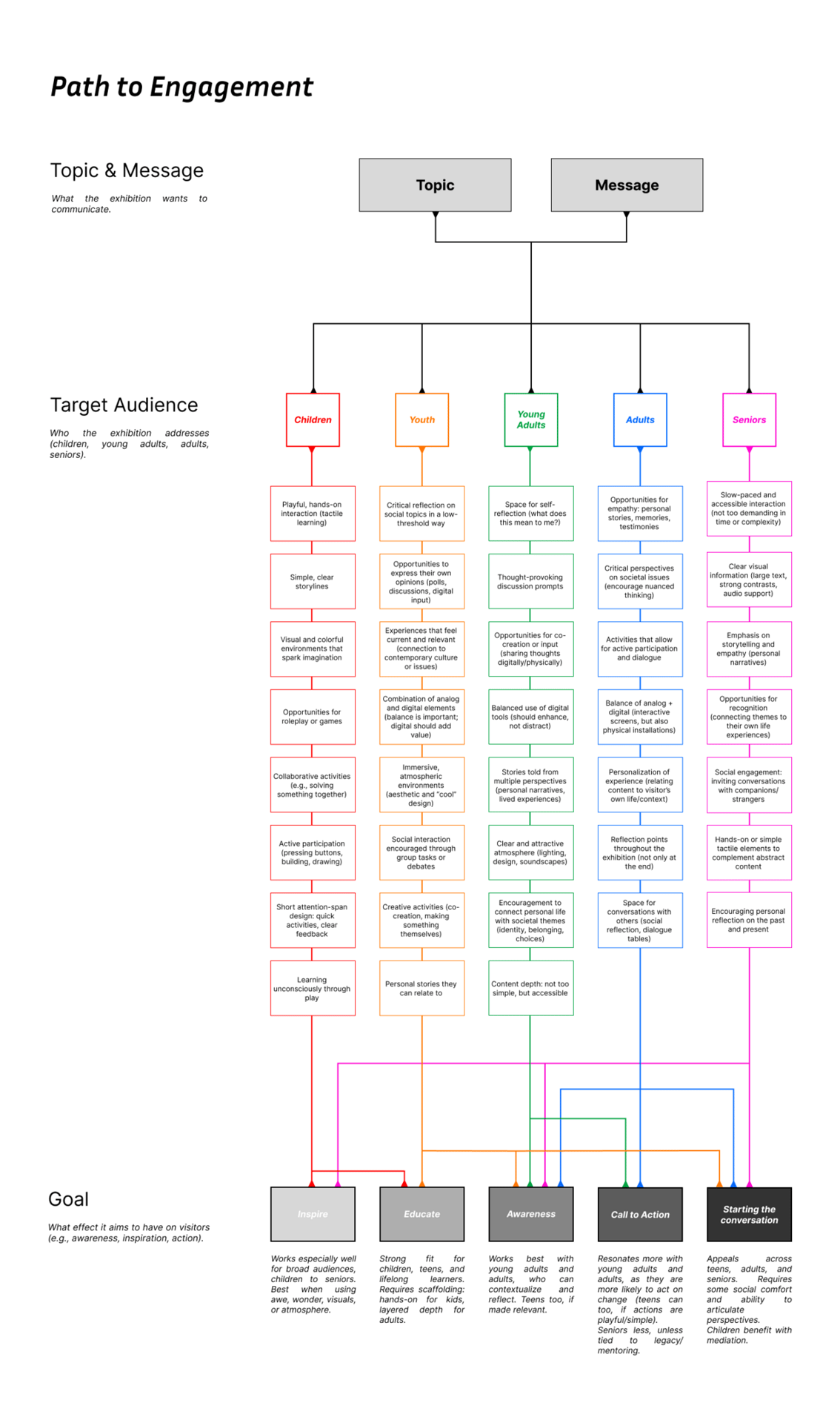
The project started with research into visitor engagement and participation, co-developed with Eva Neve. Together, we created the Path to Engagement tool — a framework that maps how different audiences connect with topics, messages, and goals within an exhibition. This tool helps identify what is needed to move visitors from awareness to reflection, conversation, or action, depending on the target audience and subject matter.
Case study
& Insights
We applied the Path to Engagement tool to FLUGT, a museum in Denmark located at a former refugee camp. While FLUGT already used strong storytelling and atmosphere, our analysis revealed three missing elements: moments of self-reflection, active visitor participation, and personalization. These gaps became key design drivers for our own concept.
Design &
proof of concept
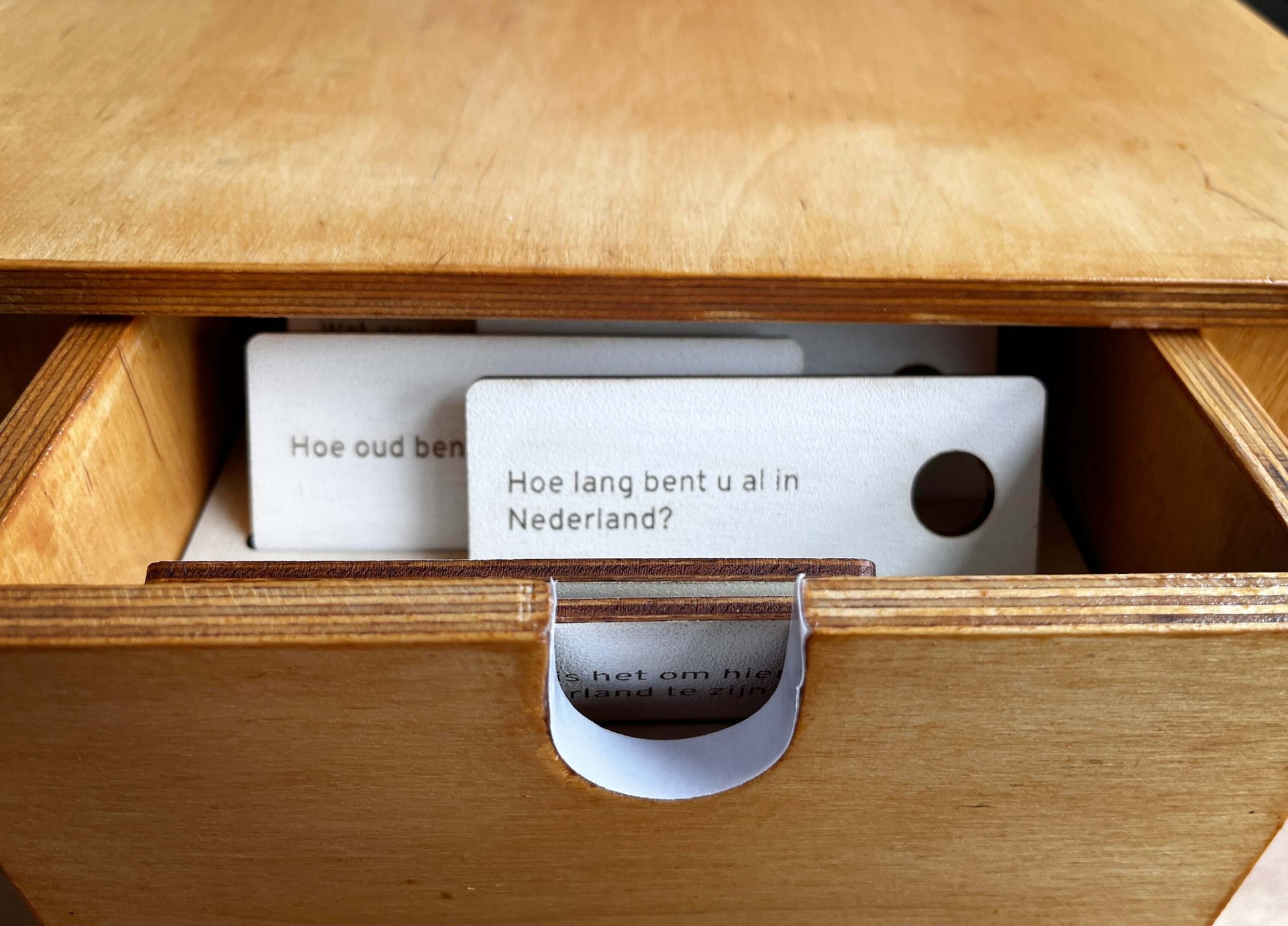
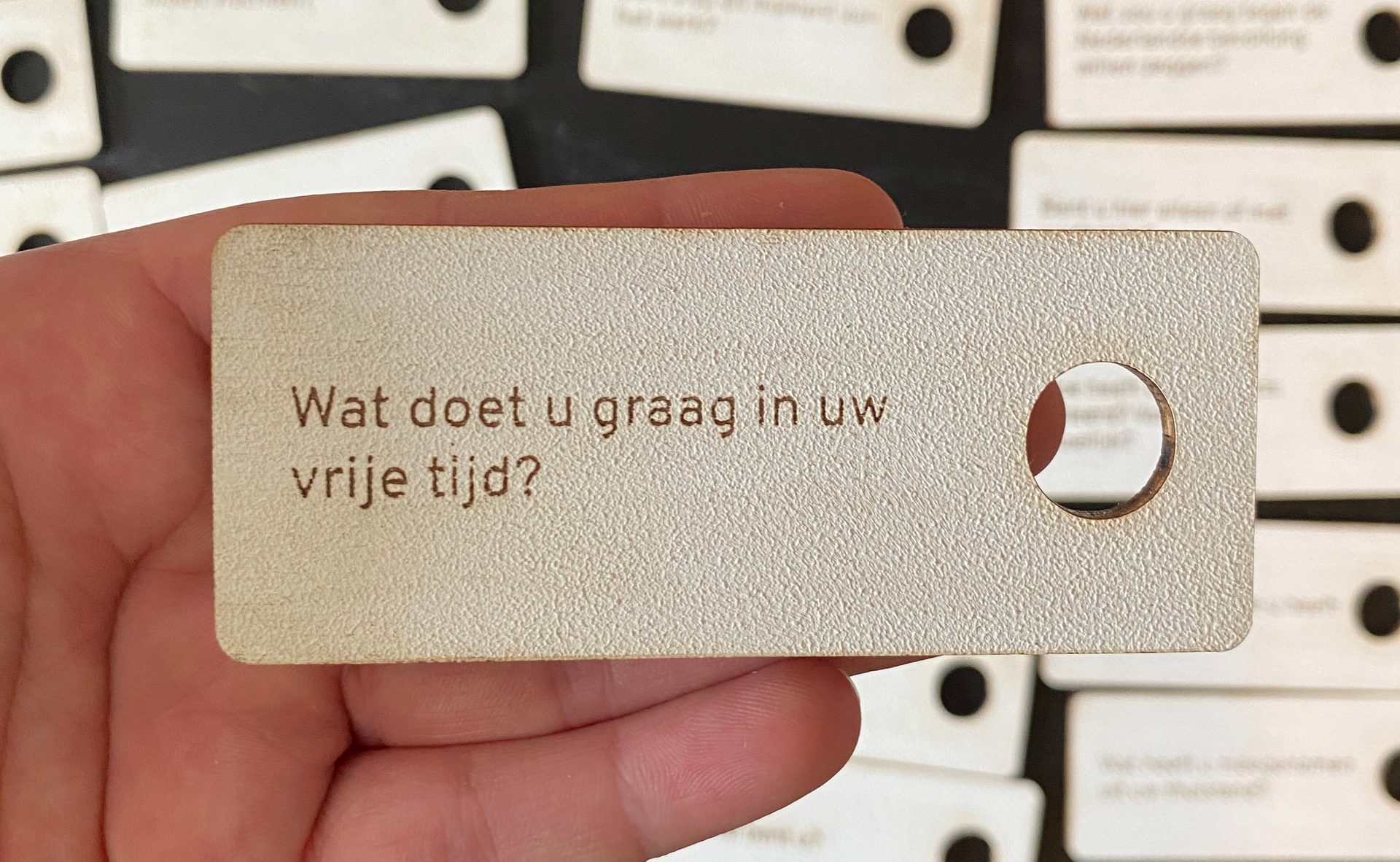
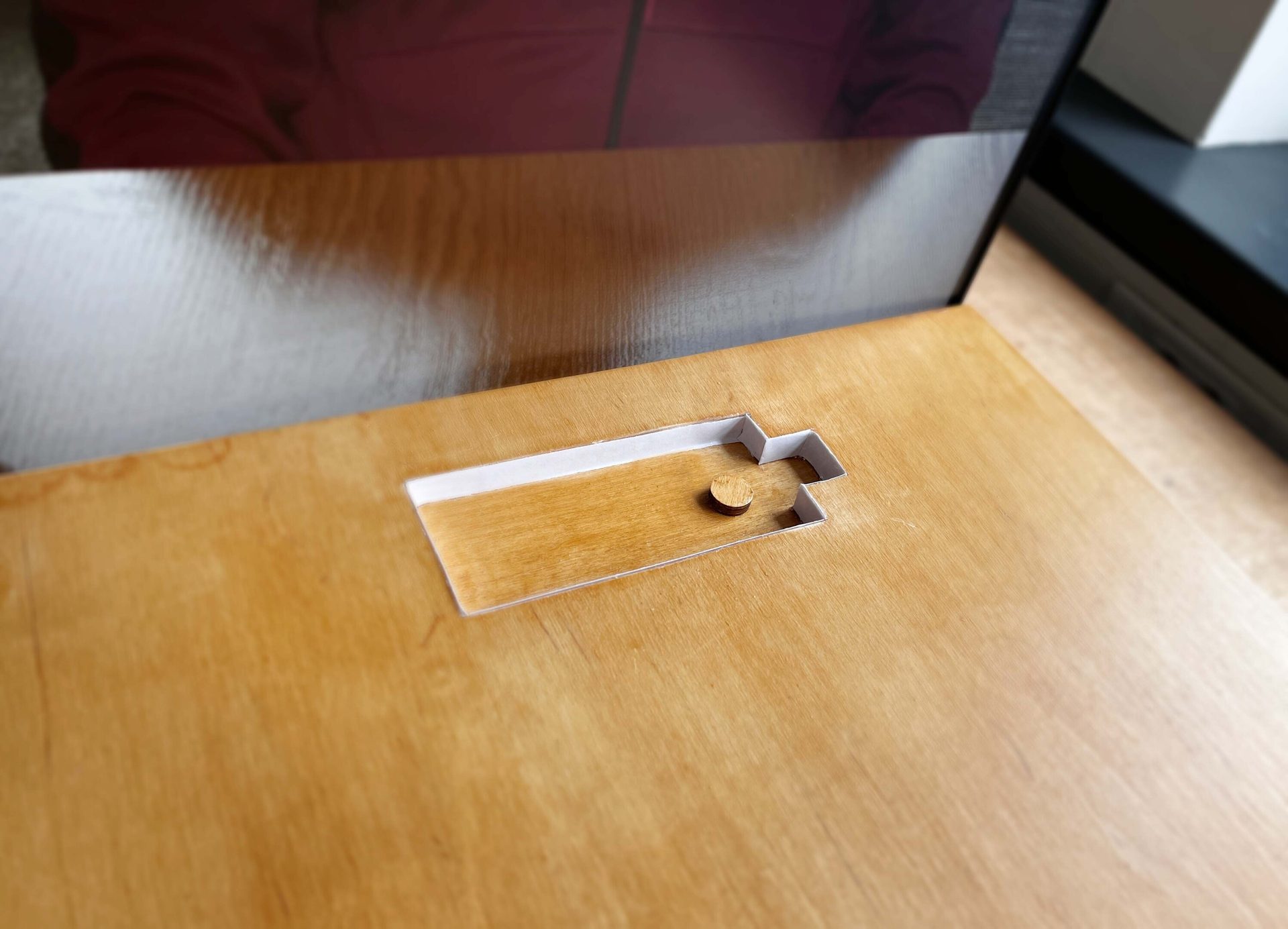
Based on these insights, we designed Table for All as a conversational installation where visitors are invited to sit together and share stories. The focus is not on delivering information, but on creating human connection through dialogue. The prototype explored how simple prompts, shared space, and facilitated interaction could help visitors move beyond stereotypes and see each other as individuals.